
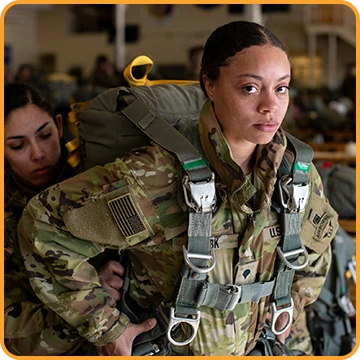
From Soldier to Immigrant: Navigating the Challenges of Relocation and Starting Over
Life rarely follows a straight path. For many, the journey from soldier to immigrant is one marked by profound change, emotional struggles, and a constant battle between the familiar and the unknown. In the case of Yakov Rozenberg, this journey wasn’t just about crossing geographical boundaries; it was about confronting internal battles, adapting to an entirely different culture, and rebuilding his life from scratch. The emotional and practical hurdles he faced along the way reveal how deeply a person’s past can influence their future, especially when starting over in a new country.
The Weight of the Past: From Soviet Military Service to a New Beginning
In Yakov’s case, the first major hurdle was his time in the Soviet military. Like many young men in the USSR, Yakov was conscripted into the army at the age of eighteen. His military service was not just routine; it was an experience that shaped his entire outlook on life. The discipline, harsh training, and brutal treatment he endured during his service became defining elements of his character. While the military taught him resilience and survival, it also left deep scars psychologically and physically.
The grueling conditions of Soviet military life, where soldiers were forced to endure humiliations and arbitrary punishments, helped Yakov develop a tough exterior. The constant battles with oppressive authority figures, constant stress, and lack of autonomy painted a grim picture of life in the USSR. However, these very experiences would later become crucial as he faced another monumental transition, his move to the United States.
The Immigrant Experience: A Drastic Shift from One Extreme to Another
Relocating from the USSR to the United States was, without a doubt, a drastic shift. For someone like Yakov, who had grown up in a system that dictated nearly every aspect of his life, the idea of freedom, true personal freedom, was both exhilarating and overwhelming. Arriving in the U.S., he was suddenly faced with an entirely new set of challenges. The stark contrast between the Soviet regime’s rigid structure and the opportunities presented by America felt like a shock to his system.
The practical challenges were immense. Yakov had to learn a new language, navigate unfamiliar cultural norms, and find a way to support himself and his family in a foreign land. Yet, even as these practical hurdles loomed large, there was a deeper emotional challenge: the sense of displacement and the overwhelming weight of starting over.
Emotional Struggles: Overcoming the Past to Embrace a New Future
The emotional toll of becoming an immigrant often goes unnoticed. While the practicalities of relocation are tough, the emotional challenges can be even more draining. Yakov’s story highlights the complex emotional landscape many immigrants face, including homesickness, loss of identity, and the strain of adapting to an entirely new way of life.
In his memoir, Yakov opens up about the deep emotional impact of leaving behind everything he had known: his friends, family, and country. The USSR had its faults, but it also provided him with a sense of belonging. Arriving in America meant stepping into the unknown, where everything from the language to the daily customs was different. In those early days, the loneliness was palpable, and Yakov had to confront not only the logistical challenges of survival but also the feelings of isolation that often accompany the immigrant experience.
Yet, despite the loneliness, Yakov’s military background gave him the tools to push through the most challenging moments. His time in the Soviet army taught him to endure hardship, to be resourceful in the face of adversity, and to maintain an unbreakable focus on the goal ahead. These skills translated well into his new life in the U.S., where perseverance, resilience, and adaptability were critical to his success.
Practical Hurdles: Navigating the System and Finding Purpose
On a practical level, Yakov had to grapple with the difficulties of building a life from the ground up. Unlike his Soviet life, in which much of his path was predetermined by the state, in America, Yakov had to carve out his own destiny. This meant starting with nothing: no job, no established network, no understanding of the cultural landscape that would help him succeed.
His early years in the U.S. were marked by trial and error. He took on menial jobs, struggling with language barriers and unfamiliar work environments. The financial strain was real, but more than that, the uncertainty of his future loomed large. However, Yakov’s military experience had instilled in him a drive to never back down from a challenge. Whether it was learning English, mastering a new job, or navigating the complexities of American bureaucracy, he tackled each obstacle with determination.
His journey wasn’t just about surviving; it was about building a future for himself and his family. And, as with his military service, he learned that the only way forward was through hard work, dedication, and the willingness to embrace the unknown.
Finding Belonging: A New Identity in a New Land
One of the most profound aspects of Yakov’s story is how, over time, he reconciled his past with his new identity as an immigrant. In the U.S., he was no longer just a soldier or a product of the Soviet system. He was a man creating a new life for himself, with all the possibilities and challenges that came with it. The transition wasn’t easy, but as he began to find his footing, Yakov realized that his past experiences, both good and evil, had prepared him for this moment.
In America, Yakov was able to redefine himself, carving out a new sense of purpose and meaning. His past as a soldier and his experiences in the Soviet Union were no longer chains holding him back; they were the foundation on which he built his future. The trials of his military life gave him the fortitude to embrace the challenges of starting anew, while the lessons he learned in those difficult years helped him appreciate the freedoms and opportunities that America offered.
Conclusion: A Journey of Resilience and Reinvention
Yakov Rozenberg’s journey from soldier to immigrant is a testament to the resilience of the human spirit. His story illustrates the many layers of transition that immigrants face: practical, emotional, and psychological. The challenges of relocating to a new country are many, but for those who, like Yakov, have endured hardship and adversity in the past, those very experiences can become the tools that help them succeed in their new lives.
As we read Yakov’s journey, we are reminded that starting over is not about forgetting where you come from; it is about using your past to fuel the pursuit of a better future. For many immigrants, like Yakov, the road ahead may be uncertain, but it is always worth traveling.